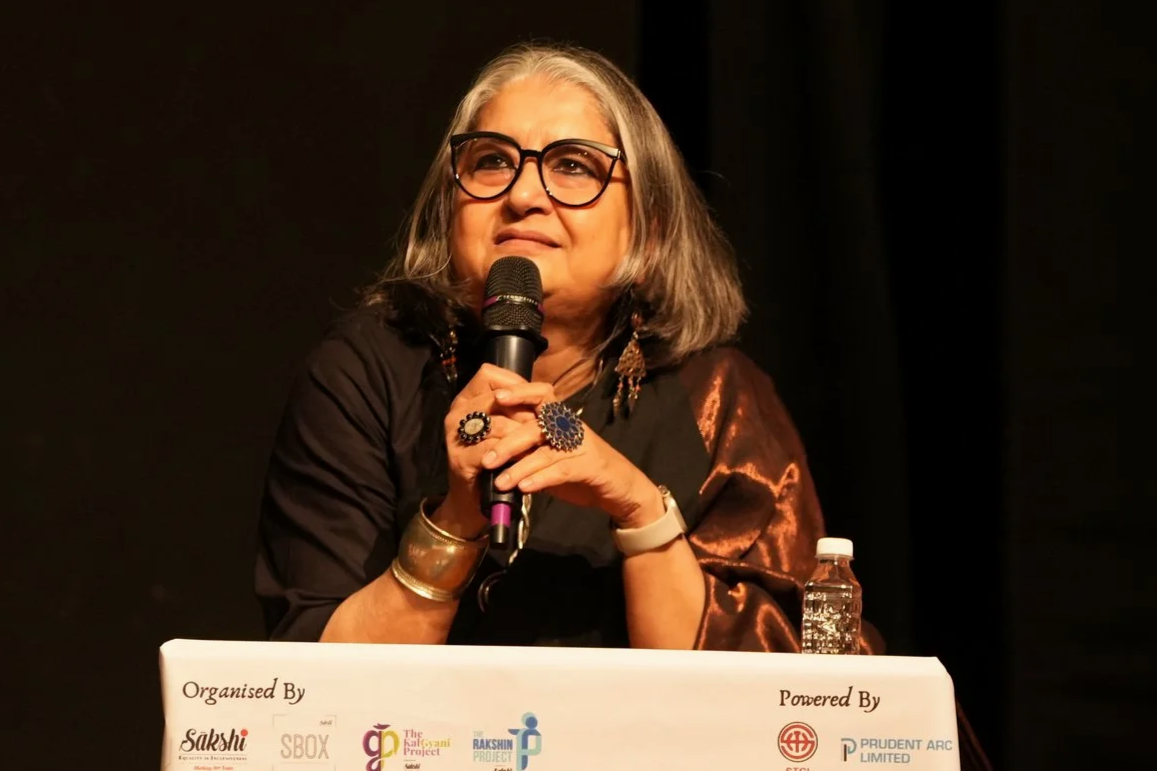
I often get asked, "Why are you doing this work?" The answer is simple, I am committed to creating a generation of leadership that is compassionate, present, and shows up—leaders dedicated to building a gender just world.
My personal journey with the social justice movement began with a single question, ‘Can I live in an accountable world? Where the youth are better informed to make their life choices than I was, in my growing up years.’ I wanted the misogynist narratives that plague our culture, our society, and our collective psyche to be challenged and changed. I wanted to nurture leaders who wouldn't just understand these issues intellectually, but would embody the courage to be present with difficult truths and the compassion to transform them into equitable, psychologically safe workplaces and systems.
Over the years, my search took me into prisons, colleges, villages, communities, and corporates. I talked to writers, artists, academics, philosophers, students, leaders, judges, prisoners, teachers, professionals, wives, mothers and daughters, asking them the same question, "What makes us say 'Yes' when we want to say 'No'? What keeps us bound to violent structures?" Through each conversation, I began to understand that breaking these cycles required more than awareness — it required a fundamental shift in how leaders communicate, create safety, and build compassionate systems.
My own experiences with sexual violence as a child and as an adult, the misogyny in our everyday lives, and the sexual harassment I faced at the workplace deepened my understanding of these violent structures. It took me four decades of hard work, fifty years to forgive myself, and twenty years of working with numerous survivors to truly comprehend how to stop this violence — not just through personal healing, but by creating leaders who would carry this work forward with unwavering commitment.
Through Social Art and Theatre Pedagogy, I cultivate critical leadership competencies — emotional intelligence, self-awareness, empathetic listening, and authentic communication. My methodology develops leaders who can navigate conflict with grace, regulate their responses under pressure, and create inclusive spaces where diverse voices are heard and valued. I strongly believe that the dream of #ENDViolence can become a reality when we develop leaders with emotional capacity and systemic understanding required to drive collective action.